
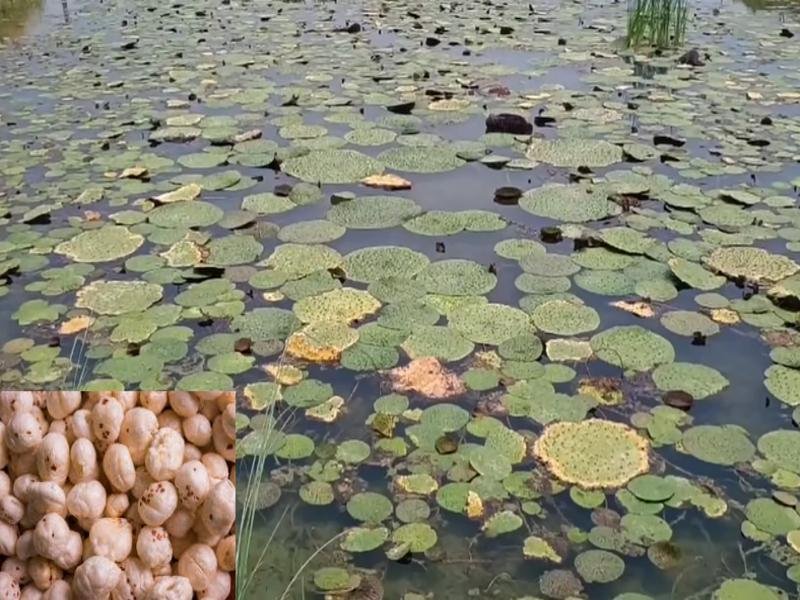
Makhana processing training is important for farmers and entrepreneurs who want to add value to raw makhana seeds and increase their income. Proper training helps people learn the correct techniques of cleaning, roasting, popping, grading, and packaging makhana for the market. Most makhana processing activities are traditionally practiced in regions of Bihar, where the crop is widely cultivated.
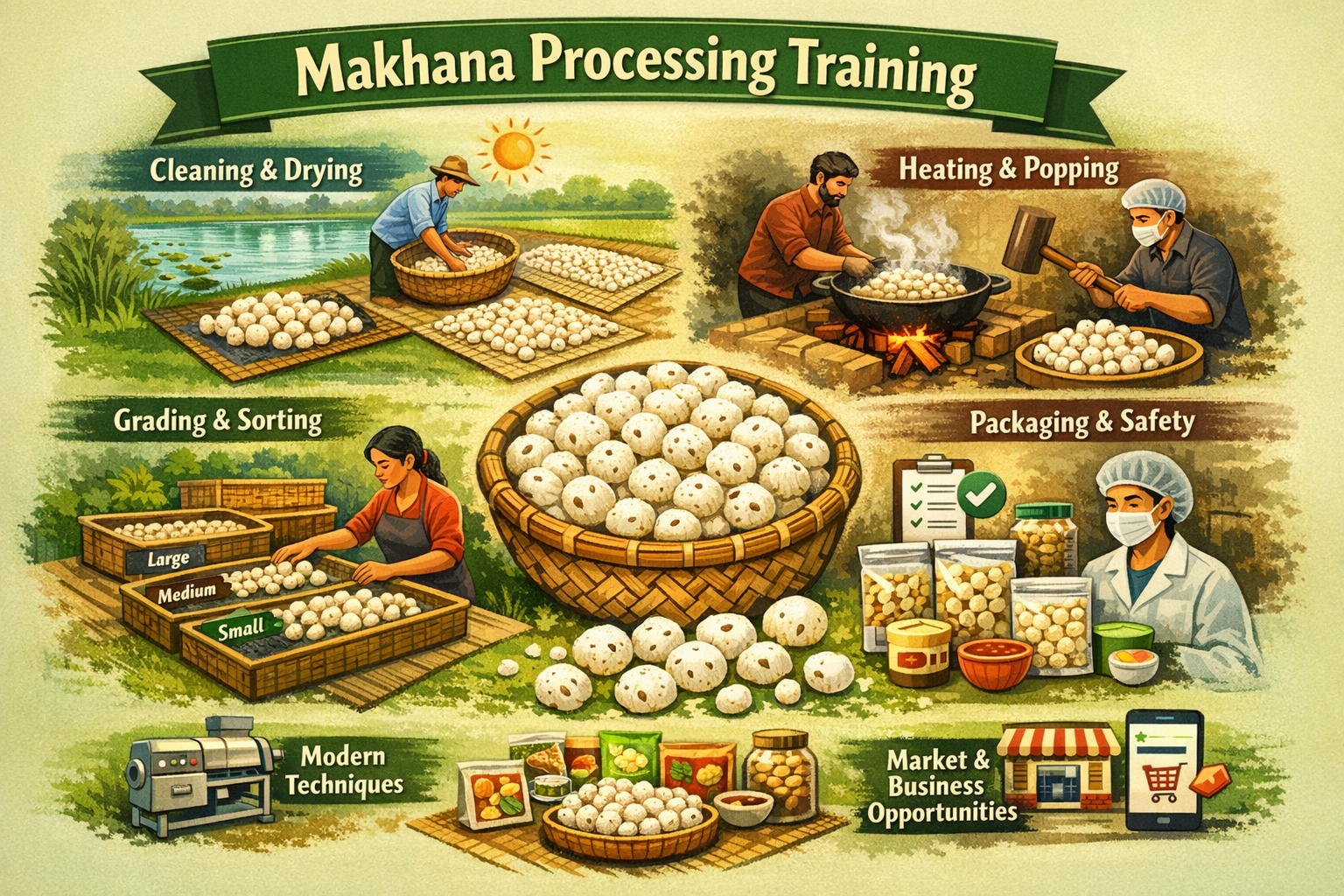
The first step in makhana processing is cleaning and drying the harvested seeds. After collection from ponds, the seeds are washed and dried under sunlight to remove moisture. Once the seeds are properly dried, they are heated in a traditional earthen or iron pan over a controlled fire. This heating process helps soften the shell and prepares the seed for popping.
The next stage is popping the makhana seeds. Skilled workers use a wooden hammer or special tools to crack the heated seeds, which causes them to pop into the white edible makhana that is commonly seen in the market. This step requires practice and skill to ensure good quality and maximum yield.
After popping, the makhana is graded according to size and quality. Larger and rounder makhana are considered premium quality and fetch higher prices in the market. The graded makhana is then packed in moisture-free packaging to maintain freshness and quality.
Training programs also teach modern processing methods, food safety standards, and packaging techniques. With proper training, farmers and small entrepreneurs can start small processing units, produce value-added makhana products, and supply them to local markets, supermarkets, and online platforms, creating better employment and business opportunities.