

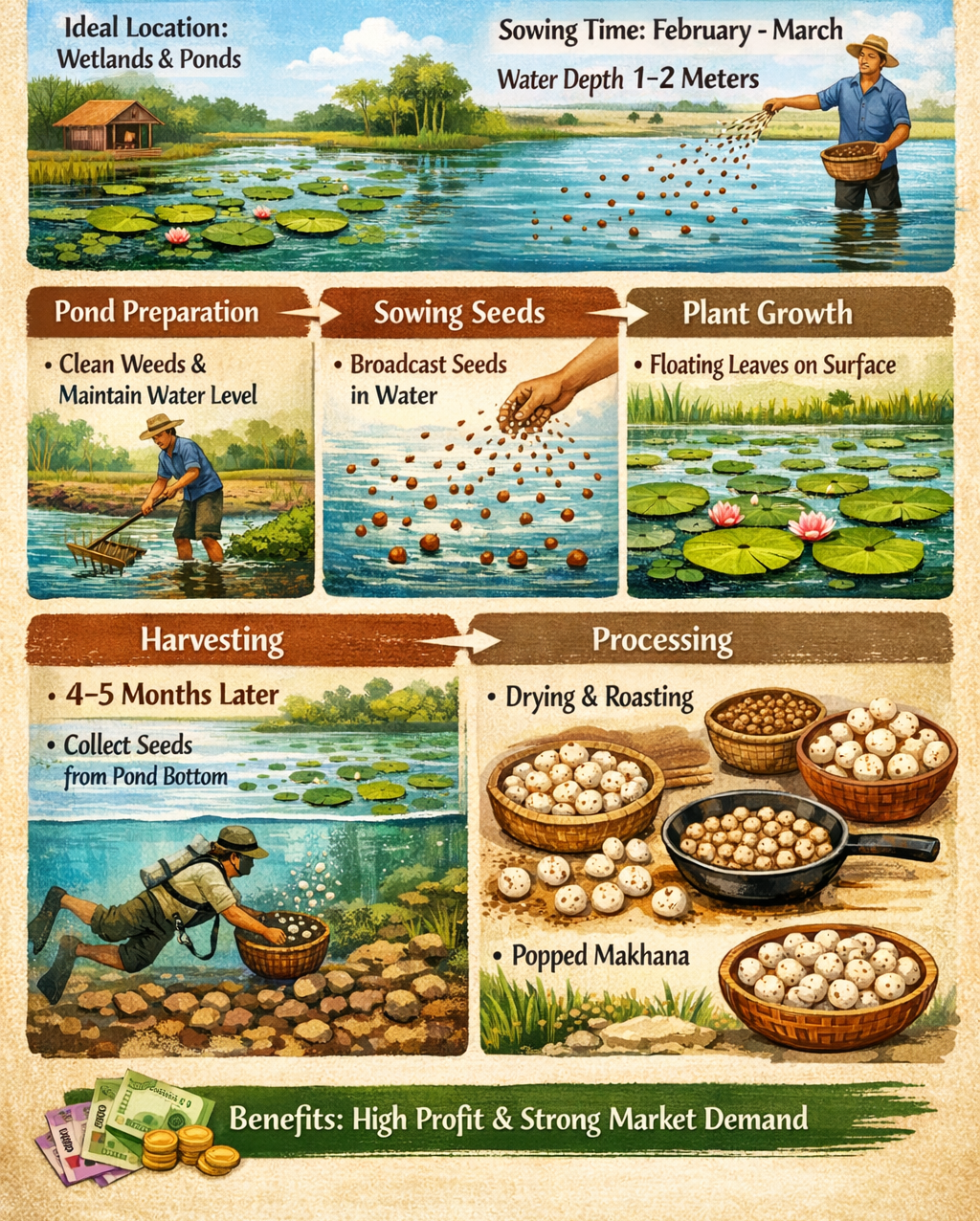
Makhana farming, also known as fox nut or lotus seed cultivation, is widely practiced in wetland areas, especially in the state of Bihar. It is an important aquatic crop grown in ponds, lakes, and low-lying waterlogged fields. Makhana requires clay or loamy soil and standing water with a depth of around 1–2 meters for healthy growth.

The cultivation process usually begins between February and March. Farmers prepare the pond by cleaning weeds, removing unwanted plants, and maintaining the proper water level. Good quality seeds from the previous harvest are used for sowing. Seeds are broadcast into the pond, where they germinate and develop floating leaves that spread across the water surface.
Makhana plants grow best in a warm climate with temperatures between 20°C and 35°C and plenty of sunlight. During the growing season, farmers regularly monitor the pond to manage weeds and maintain water levels. Proper care helps ensure healthy plant growth and better yield.
After about 4–5 months, the fruits mature and sink to the bottom of the pond. Farmers collect the seeds manually by diving or using special tools. The harvested seeds are washed, dried, and stored. Later, they are roasted and popped using traditional methods to produce the edible makhana widely used in snacks and sweets.
Makhana farming is considered highly profitable because of its increasing demand in domestic and international markets. With proper pond management, good seed quality, and careful harvesting techniques, farmers can earn a stable income from this crop. It also provides employment opportunities in rural areas and supports sustainable wetland agriculture.